The Courage to Set Boundaries: Why Saying No Creates Space for What Matters
Have you ever agreed to something even though a part of you wanted to say no?
Perhaps you didn’t want to disappoint someone. Maybe you worried about seeming selfish, difficult, or uncaring. Or perhaps saying yes simply felt easier than facing the discomfort of setting a boundary.
Many of us have been there. Boundaries are often misunderstood. They can feel uncomfortable to set, especially if we’ve learned that being kind means always being available, putting others first, or avoiding conflict.
But what if boundaries aren’t about pushing people away? What if they are one of the most caring things we can do, for ourselves and for our relationships?
What Are Boundaries?
Boundaries are the ways we communicate what feels okay for us and what doesn’t. They help us protect our time, energy, emotions, and well-being.
Sometimes boundaries are spoken. Sometimes they are quiet decisions we make for ourselves.
They might look like:
taking time to rest after a busy week
saying no to an additional commitment
expressing that something doesn’t feel okay
asking for support
choosing not to engage in conversations that leave us feeling drained
Boundaries are not walls. They are guidelines that help us stay connected to ourselves while remaining connected to others.
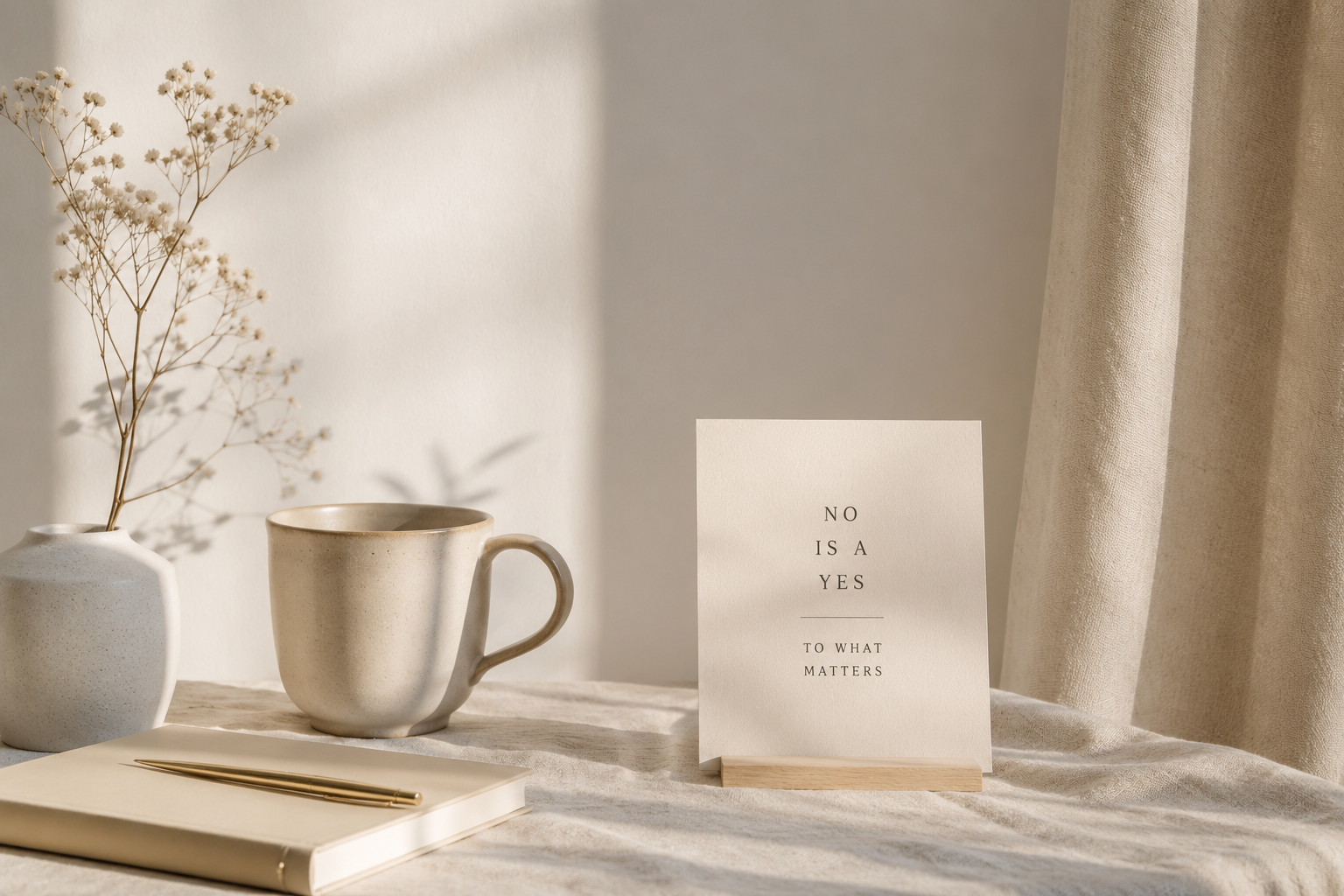
Every Yes Is Also a No
Every choice we make carries another choice alongside it. When we say yes to one thing, we are also saying no to something else. Saying yes to working late may mean saying no to rest. Saying yes to everyone’s requests may mean saying no to your own needs. Saying yes to avoiding conflict may mean saying no to honesty.
This doesn’t mean every yes is wrong. It simply invites us to become more aware of what each choice is creating.
Perhaps the question isn’t,
“Can I say no?”
Perhaps it is,
“What do I want to say yes to?”
Why Boundaries Can Feel So Difficult
Setting boundaries is rarely just about the present moment. For many people, it touches something much deeper. Perhaps saying no once led to criticism. Perhaps expressing your needs created conflict. Perhaps you learned that being loved meant being helpful, easy-going, or accommodating.
If this feels familiar, it makes sense that boundaries feel uncomfortable. Your nervous system may still be trying to protect you from experiences that once felt unsafe.
Understanding this allows us to approach ourselves with compassion rather than frustration.
Boundaries Protect What Matters
Boundaries are not about creating distance. They are about creating space.
Space for rest.
Space for honesty.
Space for meaningful relationships.
Space for creativity.
Space for your values.
Space for yourself.
Every healthy boundary is also an act of clarity.
It gently communicates,
“This is what helps me remain connected, present, and well.”
Rather than weakening relationships, healthy boundaries often allow them to become more honest and sustainable.
Boundaries and Compassion Can Exist Together
Many compassionate people worry that setting boundaries means becoming less caring. In reality, the opposite is often true. Boundaries allow compassion to remain sustainable.
Just as we explored in Your Energy Household, caring for your own energy helps you continue showing up for the people and causes that matter most.
Protecting yourself isn’t selfish. It protects your ability to keep giving from a place of choice rather than exhaustion.
A Different Perspective
Instead of asking,
“How do I learn to say no?”
Perhaps ask,
“What do I want to create more space for in my life?”
When we see boundaries as saying yes to something meaningful rather than rejecting someone else, they often begin to feel less frightening.
A Gentle Reflection
Take a few quiet moments and reflect on these questions:
Where in my life do I often say yes when I really mean no?
What am I hoping to protect by saying yes?
What might I be sacrificing in the process?
What would I like to make more space for?
What is one small boundary I could practice this week that feels kind toward both myself and others?
Notice that boundaries don’t have to begin with dramatic conversations. Sometimes they begin with a small decision to listen to yourself.
A Gentle Practice
Think of one recent situation where you said yes even though you wanted to say no.
Without judging yourself, reflect on it with curiosity.
What did you need in that moment?
What made it difficult to express that need?
If you could revisit the situation today, how might your inner guide respond?
What small step could you take next time that feels a little more aligned with yourself?
Every boundary begins with awareness.
And every moment of awareness is an opportunity to choose differently.
A Final Thought
Boundaries are not about becoming less kind. They are about allowing your kindness to become more intentional.
When we protect our time, energy, and well-being, we are not choosing ourselves instead of others. We are creating the conditions that allow us to show up with greater presence, honesty, and care.
Perhaps boundaries are not walls after all. Perhaps they are bridges. Bridges between what you value and the way you choose to live. Between caring for others and caring for yourself. Between the life you have and the life you want to create.
If this article resonated with you, maybe it is an invitation to become a little more curious about the places where your own needs have been waiting to be heard.
And if you would like someone to accompany you as you explore your patterns, strengthen your boundaries, and build a life that feels more aligned with your values, I would be happy to support you. You are warmly invited to get in touch or schedule an online counseling session.
